

 11:04
|
11:04
|
 १५:४९
१५:४९ New York to Jerusalem- 35 year-old Rijal names Nepal on world’s stage


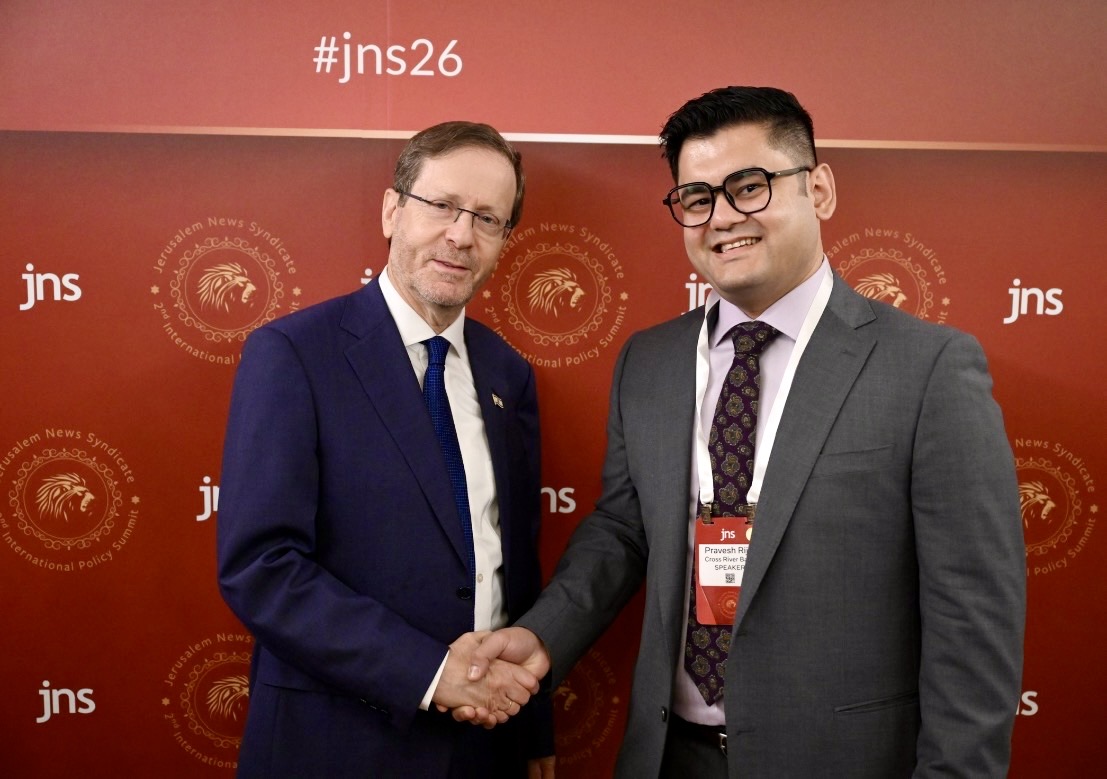
Jerusalem – At a summit attended by President Isaac Herzog and Prime Minister Benjamin Netanyahu, before a room of Israeli technologists, defence innovators, and global policy architects, Pravesh Rijal did what few Nepali executives have ever had the platform to do: he spoke Nepal’s name from the main stage of one of the world’s premier technology policy summits.
Rijal, 35, is Executive Vice President & Chief AI Officer at Cross River Bank, and one of the most senior Nepali-origin figures in US finance. A futurist who cut his teeth at Wall St. hedge funds managing over $100 billion before he was thirty, he rose through Citigroup’s global business to the C-suite of one of America’s most important technology-driven banks.
Today his team is building Cross River towards a singular ambition: to become the most consequential financial infrastructure of the Intelligence Age – the Trust Anchor on which AI-era finance runs.
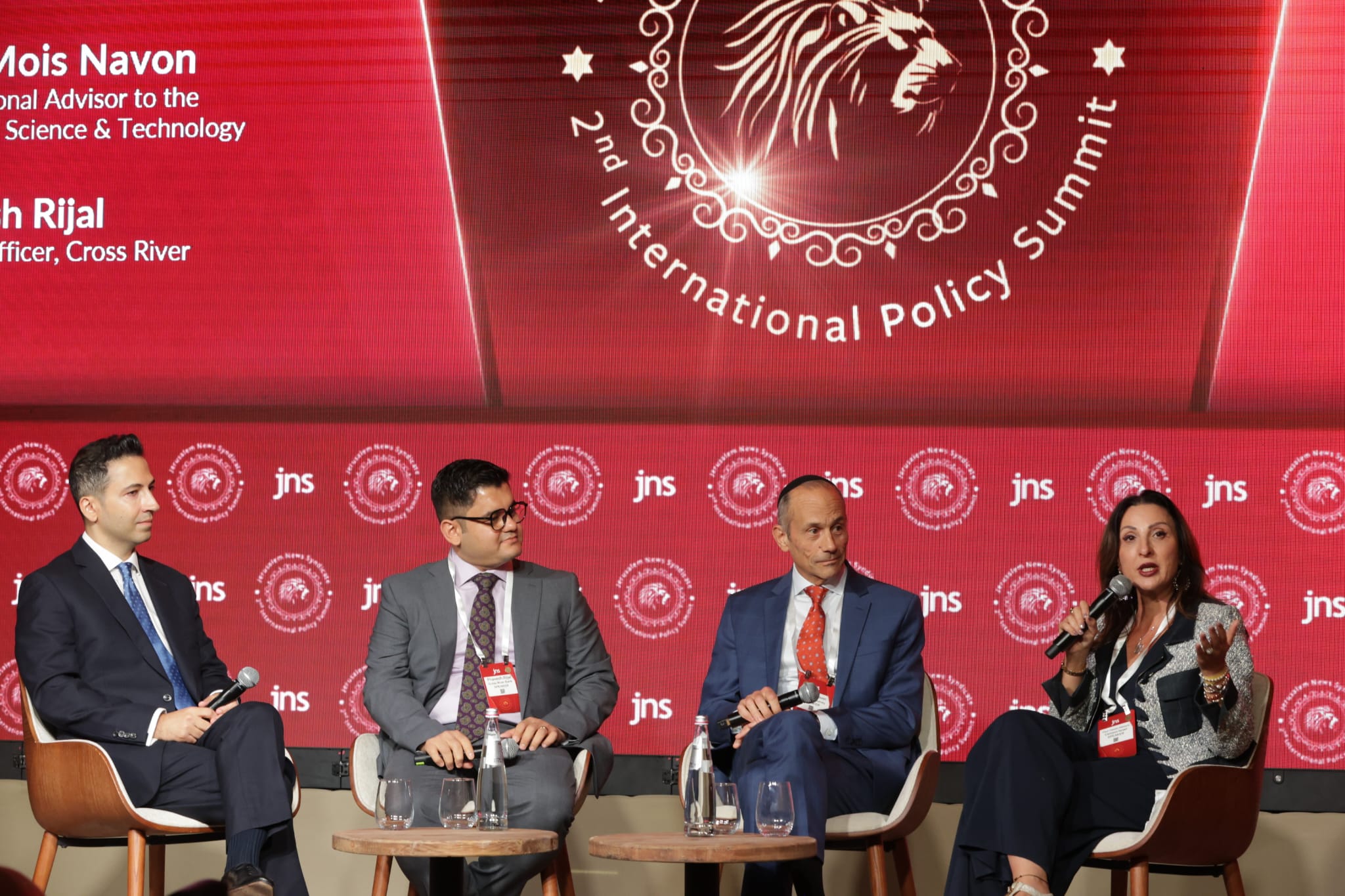
He spoke on the flagship panel of the JNS 2026 International Policy Summit – moderated by Israel’s Special Envoy for Trade and Innovation Fleur Hassan Nahoum. Earlier that morning, Rijal met President Herzog – a meeting underscoring the standing this Biratnagar- born executive now holds on the International Stage.
He opened his remarks with a framing few would expect from a banker, and characteristic of the futurist: “the last 24 months of AI progress, he argued, represents a leap roughly equal to the entire gap between early internet and the smart phone” all moving at a speed that “human cognition finds hard to realize.”
His sharpest point was about risk. The defining tension of this era, Rijal said, is not AI versus humans – it is speed versus accountability. AI runs at machine speed; governance runs at human speed. Bridging that gap is this generation’s challenge.
He praised the host nation for producing more AI companies per capita than almost anywhere on earth, drawing applause from a room that included the country’s two highest officeholders, current Cabinet ministers, Speaker of the Knesset and foreign dignitaries.
But it was the lesson he drew from Israel’s example that pointed homeward. Israel, he noted, is a nation of nine million people that chose to become a global power through technology, discipline and ambition.
The age of AI, Rijal argued, has flattened the playing field: the cost of intelligence and intelligent work orchestrating is collapsing, and for the first time small nations can punch far beyond their weight – if they move before the window closes.
Counting on Nepal’s Potential
Nepal, he suggested, sits on exactly the kind of raw advantage that era rewards. A young population. A vast global diaspora. And above all, energy – the stranded hydropower potential that could one day power not just homes but the data centers and compute infrastructure on which the AI economy runs.
“In countries we would want to bring closer – like Nepal, where I come from” Rijal said, speaking of carrying financial and technological innovation to places far and wide. “In places far and wide – to show what leadership in the era of AI, for a financial institution means.”
The emphasis was unmistakable “Nepal”, named aloud in a hall of global decision makers, placed in the same sentence as the future of the AI economy.
It was no throwaway line. Born and raised in Biratnagar, Rijal was last year named to the AI 100 list of America’s most influential AI leaders. He has carried his Nepali identity into international forums from Riyadh to San Francisco and into US Federal Reserve roundtables – making it a point that the world should see Nepalis as builders and achievers, not bystanders.
And in two days, he brings that mission home. Rija travels to Kathmandu later this week for a series of meetings with Nepal’s financial and policy leadership, with a single stated purpose: to explore how Nepal can take its place on the world stage. And how a bridge might be built from Kathmandu to Wall Street, Cross River’s Co – Head of Investment Banking and a veteran Investment Banker Henry Pinnell will join him in Kathmandu.
That is the quiet ambition beneath Monday’s remarks. For decades Nepal has been seen abroad through the narrow lens of remittance and aid. Rijal’s argument made in Jerusalem, and soon to be made in Kathmandu – is that the AI era offers something different: a chance for Nepal to be seen as a builder of infrastructure the world actually needs, trading on its compute capacity, its people and its position rather than on what it lacks.
The implications are worth sitting with. Cross River is not a minor player. It is one of the most critical infrastructure banks powering America’s fintech ecosystem – the plumbing behind platforms used by millions. When its Executive Vice President names Nepal from a stage in Jerusalem, alongside a commitment to deepen relationships – it signals that Nepal is entering a conversation it has never previously been part of : the conversation about where the global financial intelligence infrastructure gets built.
Whether Kathmandu is ready for that conversation is another question. But on Monday morning in Jerusalem, a 35-year old son of Biratnagar made sure the world knows Nepal should be in the room.



सम्बन्धित सामग्रीहरू


हाम्रो सिफारिस



- १
- २
- ३
- ४
- ५