

 15:46
|
15:46
|
 २०:३१
२०:३१ Celebrating Nepali Literature in English at the INLS Conference in Colorado


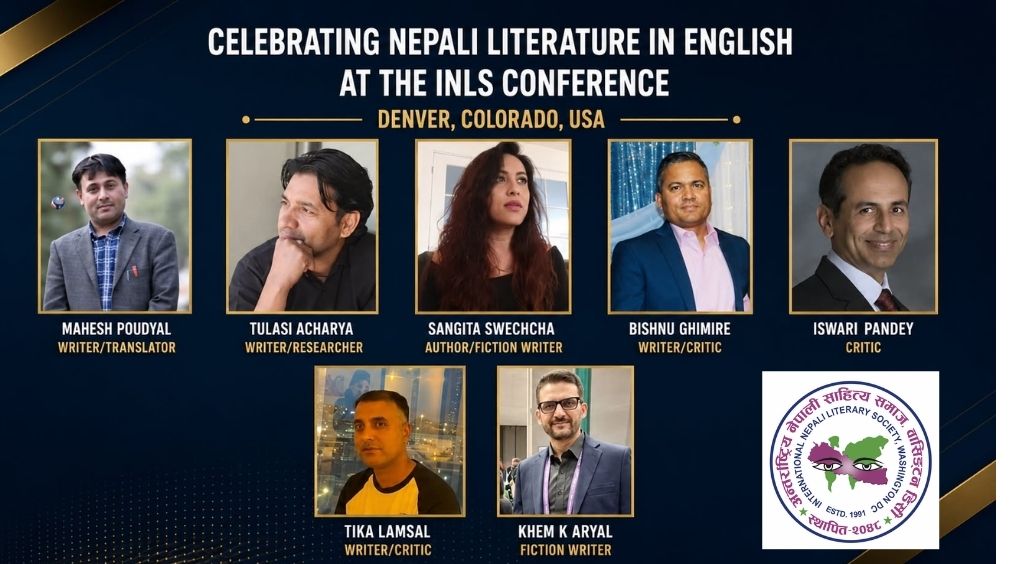
Nepali writers, translators, and literary scholars are set to come together at the INLS Conference in Denver, Colorado, for a special session titled “From Local Pages to Global Audiences: Celebrating Nepali Literature in English.” The session will explore the growth, significance, and global reach of Nepali literature written in English, while also reflecting on its evolving role within Nepal’s wider literary tradition.
Nepali literature in English has a comparatively short history compared to Nepali-language literature and other literary traditions from Nepal. The movement traces its roots to the 1950s, when Laxmi Prasad Devkota — widely regarded as Nepal’s Mahakavi, or great poet — began writing in English. At the time, however, the literary environment was not particularly welcoming towards English-language writing, and the decades that followed struggled to sustain the same level of literary sophistication demonstrated by Devkota.
The situation began to change during the 1990s, when broader global connections and educational opportunities created new pathways for Nepali writers. Since the early 2000s, Nepali literature in English has steadily established itself as a major strand of Nepali literature. Today, writers are producing fiction, poetry, memoir and criticism not only from Nepal, but also from diaspora communities in the United States, Canada, England and elsewhere.
As second-generation Nepalis growing up abroad increasingly adopt English as their primary language, literature written in English is becoming an important cultural bridge linking diasporic communities with Nepal’s literary and cultural heritage. At the same time, more Nepali literary works are being translated into English, reflecting a growing awareness of the need for Nepali literature to engage with global audiences.
The session seeks to celebrate Nepali literature in English as an integral part of Nepal’s literary landscape while encouraging meaningful discussion about translation, identity, migration and international literary visibility.
The session will be moderated by Tika Lamsal and Khem K. Aryal. Featured panellists include Iswari Pandey, Bishnu Ghimire, Mahesh Paudyal, Sangita Swechcha and Tulasi Acharya.
The programme will begin with introductory remarks and historical reflections from the moderators, followed by a series of literary readings. These readings will include Devkota selections from Kavya, to be read by Narayan Bhattarai, and works by noted authors such as Manjushree Thapa, Samrat Upadhyay, Abhi Subedi, Padma Devkota, DB Gurung, Laxmi Devi Rajbhandari, and Samyak Shertok.
The roundtable discussion will examine several contemporary themes surrounding Nepali literature in English. Iswari Pandey will speak on the identity of “Nepali” literature in an age of multidirectional migration of languages and language users (“Tongue and Territory: Both, One, or None?”), while Tulasi Acharya will discuss memoir, memory, and diaspora writing. Mahesh Paudyal will address translation and internationalisation, and Sangita Swechcha will focus on globalising Nepali literature in English. Bishnu Ghimire will explore ways of connecting younger generations in the diaspora with Nepali literature and culture.
The event will conclude with a question-and-answer session and panel discussion, offering attendees the opportunity to engage directly with the speakers on the future of Nepali literature in English.
Organisers believe the session represents an important moment for Nepali literary culture, particularly as English-language writing and translation continue to open doors to international readerships. While challenges remain in securing wider global recognition for Nepali literature, they say the growing body of work produced both within Nepal and across the diaspora demonstrates a vibrant and evolving literary tradition capable of reaching audiences far beyond national borders.



सम्बन्धित सामग्रीहरू


हाम्रो सिफारिस


- १
- २
- ३
- ४
- ५