

 08:55
|
08:55
|
 १३:४०
१३:४० Himalayan Tsunami: Implications for Society and Development in Nepal


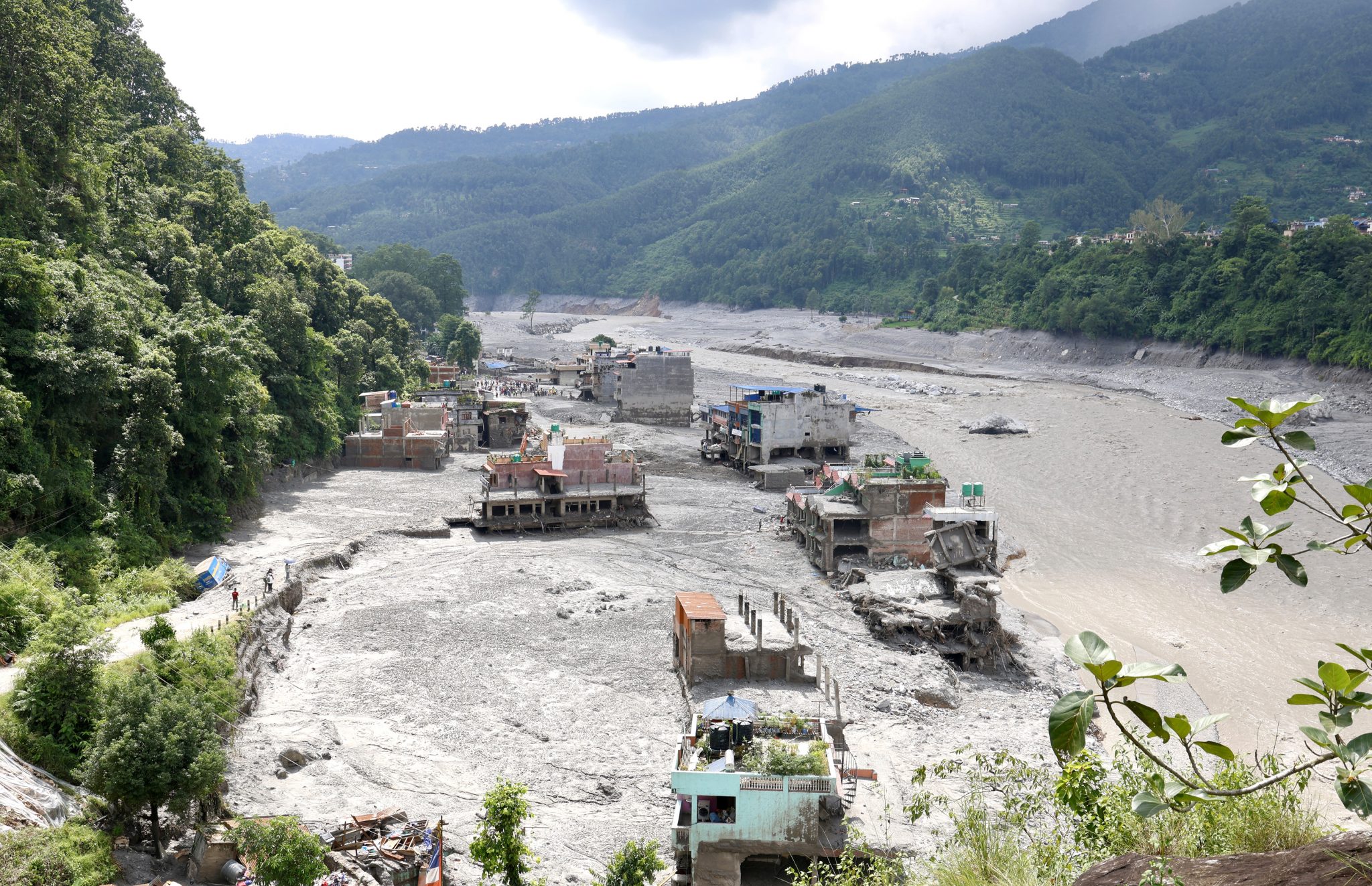
The 26 August 2026 Rasuwa disaster will remain deeply etched in the collective memory of people in Nepal and across the Hindu Kush Himalayan region, particularly among the communities directly affected by the catastrophe. The event was triggered by the collapse of a hanging glacier and associated bedrock in the Langtang area of Rasuwa. An enormous wall of water, ice, rock and debris subsequently surged through the Bhotekoshi and Trishuli river systems at reported speeds of up to 190 kilometres per hour. The disaster claimed more than 1,400 lives, and more than 5,000 people reported missing.
As the focus shifts from rescue operations to the daunting task of rehabilitation and reconstruction, which will require billions of dollars in investment, Nepal is being forced to confront deep-seated structural vulnerabilities, a profound social crisis and an existential challenge to its current development model. Understanding this crisis requires looking beyond the immediate physical destruction and examining the complex interplay of environmental, social, institutional and political factors that are shaping the future of Nepal and the wider Himalayan region.
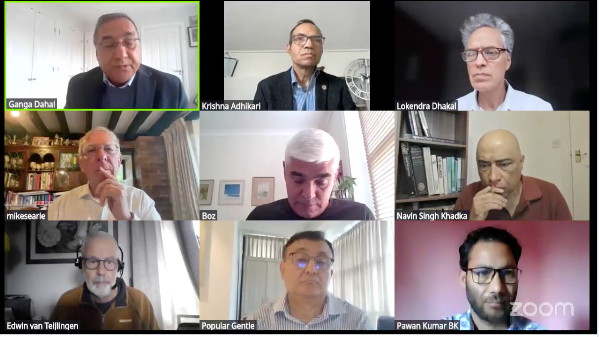
In the aftermath of the catastrophic event in Rasuwa, Nepal, the Centre for Nepal Studies UK (CNSUK) convened a webinar entitled “Himalayan Tsunami: Implications for Society and Development in Nepal.” The webinar, the 22nd in its monthly Nepal Dialogue Series, focused on four key points: the factors behind the Rasuwa disaster; strategies for disaster risk reduction and resilience building; the significance of integrating Indigenous and local knowledge into resilience-building efforts; and the need for climate justice for countries such as Nepal, which contribute very little to global greenhouse gas emissions but face disproportionately severe climate impacts. These discussions were framed by two overarching concerns: the implications for society and development. They sought to address how rehabilitation and reconstruction should proceed and what approach to development Nepal should adopt. The webinar also highlighted priority actions that Nepal should take to prepare for an increasingly uncertain Himalayan future.
Four thematic experts shared their perspectives as panellists. Professor Michael (Mike) Paul Searle of the Department of Earth Sciences at the University of Oxford, analysed the anatomy of the catastrophe and explained the interconnected factors contributing to the Himalayan tsunami. He discussed the geological processes associated with the tragedy, highlighting the roles of rapid mountain uplift, river incision and climate change in contributing to the massive landslide and subsequent flood. He emphasised the need for high-resolution mapping of high-risk areas, restrictions on construction in floodplains and effective early-warning systems to reduce the impacts of future disasters.
Mr Navin Singh Khadka, senior journalist and global environment correspondent at the BBC, highlighted the importance of strengthening geological institutions and expertise to address the geological dimensions of climate-related disasters. He also discussed long-term strategies and emphasised the critical importance of effective governance and strong institutions in building resilience.
Dr Pasang Dolma Sherpa, Executive Director of the Centre for Indigenous Peoples’ Research and Development (CIPRED), emphasised the importance of recognising Indigenous Peoples and local communities (IPs and LCs) and integrating their knowledge, practices and experiences into national disaster risk reduction policies and plans.
Dr Popular Gentle, Executive Director of Clim Adapt, elaborated on the current climate justice debate and the actions Nepal should pursue at national and international levels. He highlighted the difficulties of holding powerful actors accountable through the UNFCCC process and emphasised the need to build a stronger constituency for climate justice.
Collectively, the panellists stressed the need for strategic and coordinated action, including geological and glaciological mapping, improved land-use and infrastructure planning, appropriate small-scale and environmentally sensitive engineering solutions, stronger institutions, and community-centred approaches to reducing future risks. This article draws primarily on the views shared by the panellists during the webinar. The following sections synthesise the key messages under each of the major thematic areas.

Thematic presentations by the panellists
Interconnected factors behind the “Himalayan tsunami”
Professor Mike Searle explained that the Rasuwa catastrophe was not simply a flash flood but a complex and cascading hazard arising from the interaction of extreme geological fragility and rapid environmental change. The primary trigger was a massive structural failure at high altitude involving the collapse of a section of hanging glacier together with unstable bedrock on steep mountain slopes. Several interconnected factors intensified the event.
Cryosphere degradation: Decades of rising regional temperatures have contributed to widespread degradation of permafrost. Frozen ground that historically acted as a natural “glue”, binding unstable rock and glacial ice together, has increasingly thawed, potentially leaving mountain slopes more structurally unstable and vulnerable to failure.
Shifts in precipitation: Intense and unseasonal monsoonal rainfall at exceptionally high elevations saturated loose moraines and fractured rock formations. Increased pore-water pressure further destabilised already fragile slopes and contributed to conditions conducive to catastrophic failure.
Cascading processes: When millions of cubic metres of ice and rock collapsed, the enormous kinetic energy transformed the avalanche into a highly fluid and destructive debris torrent. As it travelled rapidly through narrow, V-shaped mountain valleys, it accumulated sediment, boulders, trees and other material, substantially increasing its volume and destructive power before striking downstream settlements and infrastructure.
The key message is that Himalayan disasters can no longer be viewed as isolated events. They increasingly need to be understood as compound and cascading hazards in which geological processes, cryosphere change, extreme weather and human interventions interact and amplify one another.
The frontline of climate justice
Dr Popular Gentle highlighted the profound climate justice dimensions of the tragedy. Nepal contributes less than 0.1 per cent of global greenhouse gas emissions, yet its mountain communities are experiencing some of the most severe and life-threatening consequences of a warming climate.
The Himalayan tsunami therefore illustrates a fundamental injustice: communities and countries that have contributed least to the accumulation of greenhouse gases in the atmosphere often pay the highest price through the loss of lives, livelihoods, ecosystems and development opportunities. For a resource-constrained country whose economy depends heavily on climate-sensitive sectors such as tourism, agriculture and hydropower, economic losses from disasters of this magnitude can transform a climate emergency into a long-term national development crisis.
In international forums, Nepal therefore needs to move beyond a discourse centred primarily on humanitarian assistance and strengthen its demand for adequate, predictable and accessible climate finance. In particular, support through mechanisms such as the Fund for Responding to Loss and Damage should prioritise grants rather than loans. Countries facing climate impacts for which they bear little historical responsibility should not be pushed further into debt simply to rebuild infrastructure and communities destroyed by climate-related disasters. Climate justice must therefore be understood not merely as an environmental concern, but as an issue of equity, responsibility, development and human rights.
Custodians of the land: The significance of Indigenous and local knowledge
Dr Pasang Dolma Sherpa emphasised the critical role of Indigenous Peoples and local communities (IPs and LCs) in disaster preparedness, response and long-term resilience. Mountain communities such as the Tamang, Sherpa and other groups have lived for generations within the dynamic and often hazardous landscapes of the high Himalayas. Through this experience, they have developed a rich body of traditional ecological knowledge concerning rivers, forests, slopes, weather patterns, settlements and safe locations. Local institutions, including traditional community organisations and community forest user groups, can play important roles as first-response networks during disasters. Their knowledge of local landscapes, traditional routes, historical hazard patterns and community organisation can complement formal disaster-management mechanisms. Recognising the knowledge and role of IPs and LCs is therefore not simply a matter of social inclusion or equity; it is also an important component of effective environmental management and disaster resilience.
Future resilience cannot be designed solely from offices in Kathmandu. It requires the meaningful participation and empowerment of local communities. Traditional ecological knowledge should be systematically integrated with modern scientific information, monitoring systems and technologies. Communities should also be meaningfully involved in watershed management, land-use planning, disaster preparedness and decisions affecting vulnerable landscapes. Securing the rights and tenure of Indigenous Peoples and local communities is equally important. Communities with recognised rights, stronger local institutions and meaningful decision-making authority are better positioned to protect natural resources, manage risks and resist inappropriate development in environmentally fragile areas. The central lesson is clear: Indigenous and local knowledge is not simply knowledge from the past; it is an important resource for building resilience for the future.
Governance, institutions and the path to resilience
Mr Navin Khadka highlighted how the scale of the Rasuwa destruction raises fundamental questions about Nepal’s approach to infrastructure development, environmental governance and institutional preparedness. Development in fragile mountain environments requires far greater attention to geological and environmental risks. Poorly engineered roads, inappropriate construction on unstable slopes and major infrastructure located within narrow and hazard-prone river valleys can significantly increase exposure and vulnerability when extreme events occur. Building resilient societies and ecosystems therefore requires fundamental improvements in governance and institutional capacity. While internationally applied climate models are useful, Nepal needs approaches tailored to its unique environmental conditions and geological features.
Devolution of disaster risk management: Nepal’s federal system provides an important opportunity to strengthen locally led disaster risk reduction. Local governments are closest to vulnerable communities and should therefore have adequate authority, financial resources, technical capacity and information to undertake risk mapping, enforce land-use regulations, establish no-build zones where necessary, prepare evacuation plans and respond rapidly when hazards emerge.
Stronger regulatory systems: Climate and disaster-risk screening should become an integral and mandatory component of major infrastructure planning. Proposed hydropower projects, highways and other infrastructure in glaciated and geologically fragile basins should be subjected to rigorous assessments covering relevant risks, including landslides, ice avalanches, permafrost instability and glacial lake outburst floods (GLOFs). Environmental and social safeguards must not be treated merely as administrative requirements. They should become central components of development planning, project design and investment decisions.
Transboundary institutional cooperation: Himalayan hazards do not respect political boundaries. Rivers, glaciers, weather systems and cascading hazards connect Nepal with neighbouring China and India. Disaster governance must therefore include stronger regional cooperation. Nepal should advocate effective transboundary mechanisms for monitoring Himalayan risks, sharing satellite and hydrological information, operating upstream sensors and establishing real-time cross-border early-warning systems. Timely exchange of information could save lives and protect vulnerable downstream communities.
Summarising the views of the panellists
The “Himalayan tsunami” represents a profound warning against business-as-usual development in fragile mountain environments. For Nepal, strengthening institutions, recognising the rights and knowledge of local communities, adopting climate-resilient development approaches and advocating international climate justice should no longer be viewed as optional policy choices. They are increasingly fundamental to the country’s sustainable and resilient future.
At the conclusion of the webinar, Dr Ganga Ram Dahal, chair of the webinar, synthesised the views of the panellists and highlighted several key actions that Nepal should pursue.
Nepal must redefine development
The Himalayan tsunami is ultimately a warning about Nepal’s model of development. Every road, bridge, hydropower project and settlement constructed today must be designed for the climate and risks of tomorrow, rather than relying solely on the conditions of yesterday. Climate and disaster-risk assessments should therefore become mandatory for major infrastructure investments. Nature-based solutions, including watershed restoration, forest protection, slope stabilisation, and the protection and restoration of river corridors should complement appropriately designed engineering solutions. Cross-border monitoring and information sharing are equally important because Himalayan rivers and hazards do not respect political boundaries.
Above all, Nepal must move from disaster response to disaster prevention, from reconstruction to resilience, and from fragmented projects to risk-informed development. We cannot prevent every avalanche, glacial flood, landslide or extreme rainfall event. However, through better planning, preparedness, governance and investment, we can prevent many natural hazards from becoming human catastrophes. The Rasuwa disaster should therefore not become simply another tragedy that Nepal remembers for a few months and then gradually forgets. It should become a turning point in how the country understands and pursues development and resilience.
The Himalayan tsunami raises a fundamental issue of climate justice
Despite contributing very little to global greenhouse gas emissions, Nepal faces disproportionately severe climate impacts. The international response must therefore move beyond short-term humanitarian assistance towards adequate adaptation finance, support for loss and damage, technology transfer and sustained investment in climate-resilient development. Climate finance should reach the communities most exposed to climate risks and should enable Nepal to strengthen resilience without increasing an already significant financial burden. Nepal should continue to make the case internationally that climate justice requires those with the greatest historical responsibility and capacity to contribute fairly to addressing the losses experienced by vulnerable countries.
Nepal must shift from disaster response to prevention and preparedness
The traditional approach of mobilising institutions primarily after a disaster has occurred is no longer adequate. Nepal needs to invest substantially in multi-hazard risk mapping, glacier and slope monitoring, remote sensing, forecasting, early-warning systems, evacuation planning and community preparedness.
Early warning alone is insufficient: it must lead to early action. Communities need to understand warnings, know what actions to take and have safe evacuation routes and locations available. Institutions at federal, provincial and local levels must clearly understand their respective responsibilities and coordinate effectively before, during and after disasters.
Nepal must adopt a multi-pronged strategy to build resilient societies and ecosystems
The Rasuwa disaster resulted from a complex interaction among fragile mountain systems, climatic and environmental change, and human interventions. No single intervention can adequately address such interconnected risks. Nepal therefore requires a multi-pronged resilience strategy that combines scientific knowledge, geological and glaciological monitoring, Indigenous and local knowledge, strong institutions, accountable governance, appropriate infrastructure, ecosystem restoration, effective land-use planning, early-warning systems and meaningful community participation.
The webinar reminded us that climate justice matters because those who contribute least to climate change often experience some of its greatest consequences. It also highlighted that Indigenous and local knowledge matters because knowledge accumulated over generations can complement modern science and provide valuable insights for managing risks and strengthening resilience. Equally importantly, governance matters. Resilience cannot be achieved without capable institutions, clear responsibilities, accountability, effective coordination and meaningful participation by communities in decisions affecting their lives and landscapes.
Conclusion: turning disaster into a catalyst for change
The Himalayan tsunami should not be remembered only as a disaster that Nepal endured. It should be recognised as a warning that demands fundamental changes in the way the country understands development, manages environmental risks and prepares for an increasingly uncertain climatic future. The central message emerging from the CNSUK webinar is that Nepal must develop differently, not simply rebuild better.
This requires bringing together modern science and Indigenous knowledge; engineered infrastructure and nature-based solutions; national policy and locally led action; stronger institutions and empowered communities; and domestic responsibility alongside international climate justice. The tragedy also carries a message beyond Nepal. The Himalayas are undergoing rapid environmental change, while millions of people across South Asia depend directly or indirectly on Himalayan ecosystems and river systems. Protecting the Himalayas is therefore not only Nepal’s responsibility; it is a regional and global concern. The Rasuwa catastrophe must become a turning point. Nepal now has an opportunity to transform tragedy into action by placing resilience, environmental sustainability, social justice and accountable governance at the heart of its development pathway. The Himalayas remind us that yesterday’s development model cannot safely build tomorrow’s Nepal.
Nepal Dialogue UK: Monthly Webinar is an initiative by the Centre for Nepal Studies UK (CNSUK) to promote knowledge exchange and dialogue on Nepal and the Nepali diaspora. Launched in January 2025, the series alternates between research-based public talks and panel discussions each month. The online webinars are free and open to participants worldwide via Zoom. They take place on the first Saturday of every month at 10.00 am (UK time).
CNSUK welcomes feedback, ideas and active collaboration from interested individuals and institutions. Watch our past sessions here: https://www.youtube.com/@CNSUK.NepalDialouge
Written by: Ganga Ram Dahal, PhD
International consultant, Food and Agriculture Organization of the United Nations (FAO)
Research fellow at CNSUK




सम्बन्धित सामग्रीहरू


हाम्रो सिफारिस



- १
- २
- ३
- ४
- ५