

 08:06
|
08:06
|
 १२:५१
१२:५१ Foreign Employment in Nepal: Gains, Risks, and Lost Rights



Som Prasad Sapkota
Foreign employment has become a major way of life for many Nepali families. Because of limited job opportunities and low wages at home, thousands of young Nepalis leave the country every year to work abroad in search of better income and a better future. Today, nearly one-third of Nepal’s population is living outside the country, either temporarily or permanently. This shows how deeply foreign employment has become a part of Nepal’s economy and society.
The Government of Nepal has officially approved 110 countries as foreign employment destinations. However, Nepali workers are found in as many as 151 countries. According to the Department of Foreign Employment, Nepalis are working in 52 countries that are not officially approved. Many young people even migrate to risky and unstable countries such as Iraq, Libya, Sudan, Somalia, and Congo. This happens mainly because of unemployment, poverty, and a lack of proper information about safe migration.
To make foreign employment safer, Nepal has signed labour agreements with only 12 countries, including Qatar, South Korea, Malaysia, the UAE, Japan, and Israel. Among them, South Korea and Israel use a government-to-government system, which is safer and more transparent for workers. Unfortunately, many popular destination countries, such as Kuwait, still do not have labour agreements with Nepal. As a result, Nepali workers in these countries face greater risks of exploitation, poor working conditions, and legal problems.
Despite these challenges, foreign employment plays a huge role in supporting Nepal’s economy. Money sent home by migrant workers—known as remittance—helps families pay for food, education, healthcare, and housing. Remittance also strengthens Nepal’s foreign currency reserves. In the first six months of the fiscal year 2025/26, remittance inflows increased by 39.1 per cent compared to the previous year. According to Nepal Rastra Bank, Nepal received Rs 1.06 trillion in remittances between mid-July and mid-January. This is a major increase compared to the slow growth of remittances during the same period last year. While remittance helps to keep the economy stable, depending too much on it can be risky in the long run.
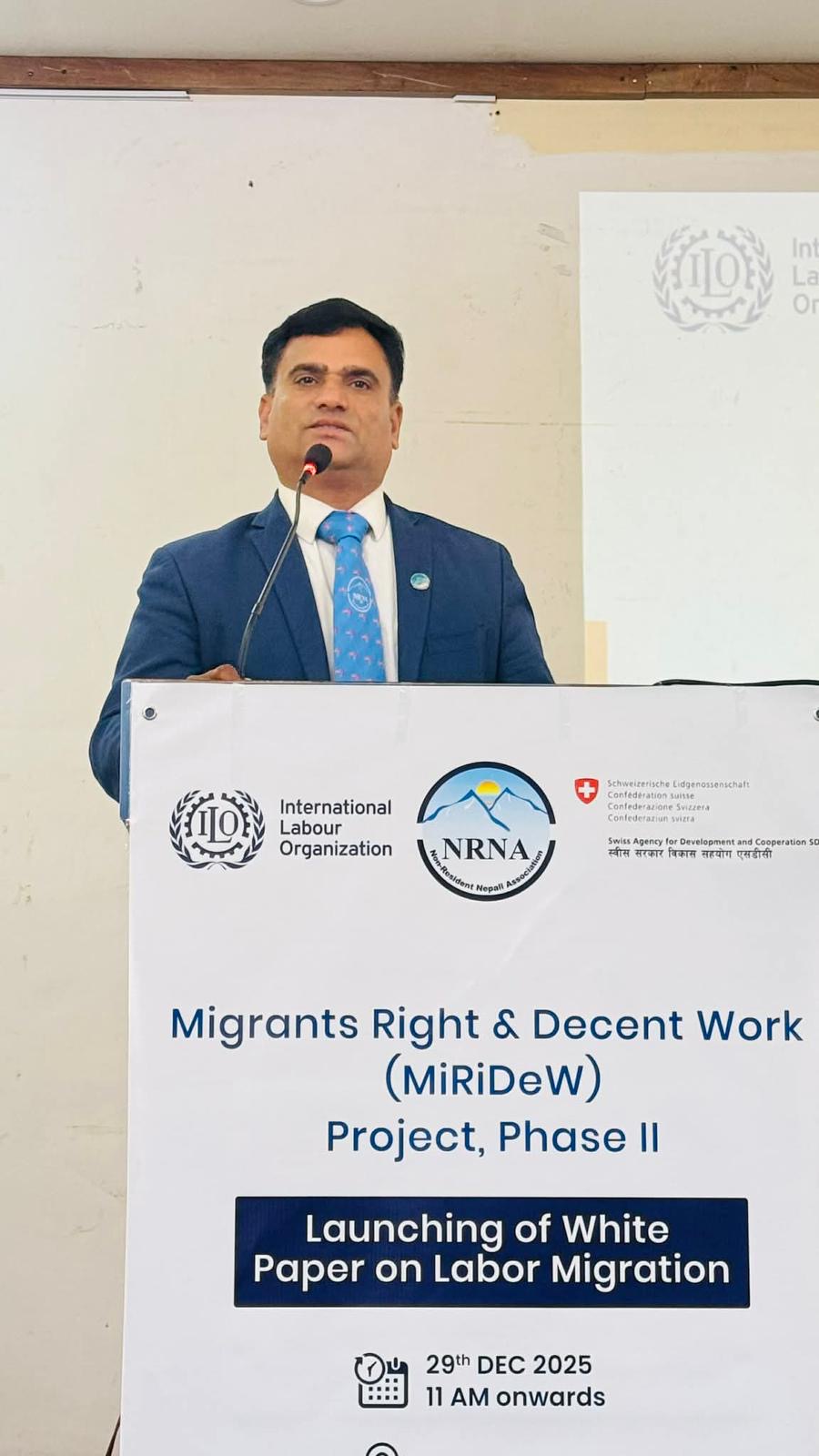
Life abroad is not easy for many Nepali workers. They often face unsafe working conditions, broken contracts, unpaid wages, high recruitment fees, and fraud by manpower agencies. Many migrants leave Nepal without enough information or legal protection, which makes them more vulnerable. When problems arise, help from Nepali embassies is often limited due to a lack of staff and resources.
In addition to these hardships, Nepali migrant workers also lose their political rights. Although they support the nation’s economy through remittances, most of them cannot vote in national elections. The High Court has directed the government to make arrangements so Nepalis living abroad can exercise their voting rights. However, the government has not yet created any practical system, such as overseas or absentee voting. This means millions of citizens who contribute so much to the country have no voice in choosing their leaders.
To improve the situation, the government needs to take strong and practical steps. Expanding labour agreements with major destination countries, controlling manpower agencies, and making migration procedures simpler and more transparent are very important. Nepali embassies abroad should be strengthened so they can provide legal assistance, rescue services, and support to workers in trouble.
Nepal also needs to focus on sending skilled workers abroad. Training in technical skills and languages can help Nepali workers earn better wages and stay safer at work. Before leaving the country, young people should receive clear and accurate information about their destination, including wages, laws, and risks.
Equally important is helping workers who return home. Programmes that support small businesses, provide low-interest loans, and utilise the skills migrants have gained abroad can reduce Nepal’s long-term dependence on foreign employment.
In conclusion, foreign employment is both a blessing and a challenge for Nepal. It brings income and stability to millions of families and supports the national economy. At the same time, it exposes workers to serious risks and denies them basic rights, including the right to vote. Making foreign employment safer and ensuring voting rights for Nepalis abroad is not just an economic issue—it is a matter of fairness, dignity, and democracy.
By Som Prasad Sapkota




सम्बन्धित सामग्रीहरू


हाम्रो सिफारिस



- १
- २
- ३
- ४
- ५