

 06:15
|
06:15
|
 ११:००
११:०० How Is Diaspora Writing Reshaping Nepali Literature?


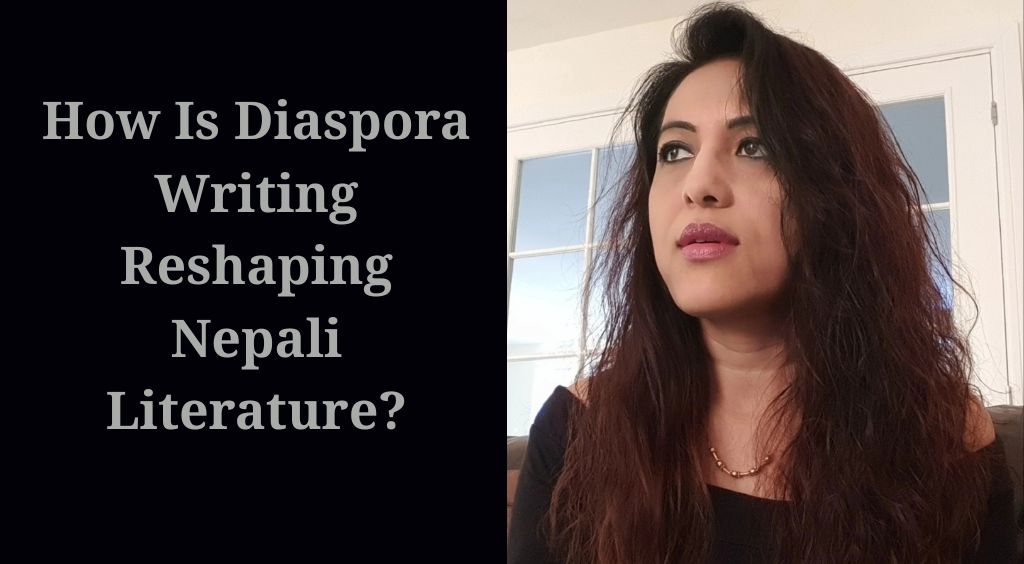
London–Nepali literature is increasingly being written beyond Nepal’s geographical borders, bringing new experiences, identities and perspectives into the literary conversation. But does living abroad automatically make a writer a diaspora writer? And what makes a piece of writing genuinely diasporic?
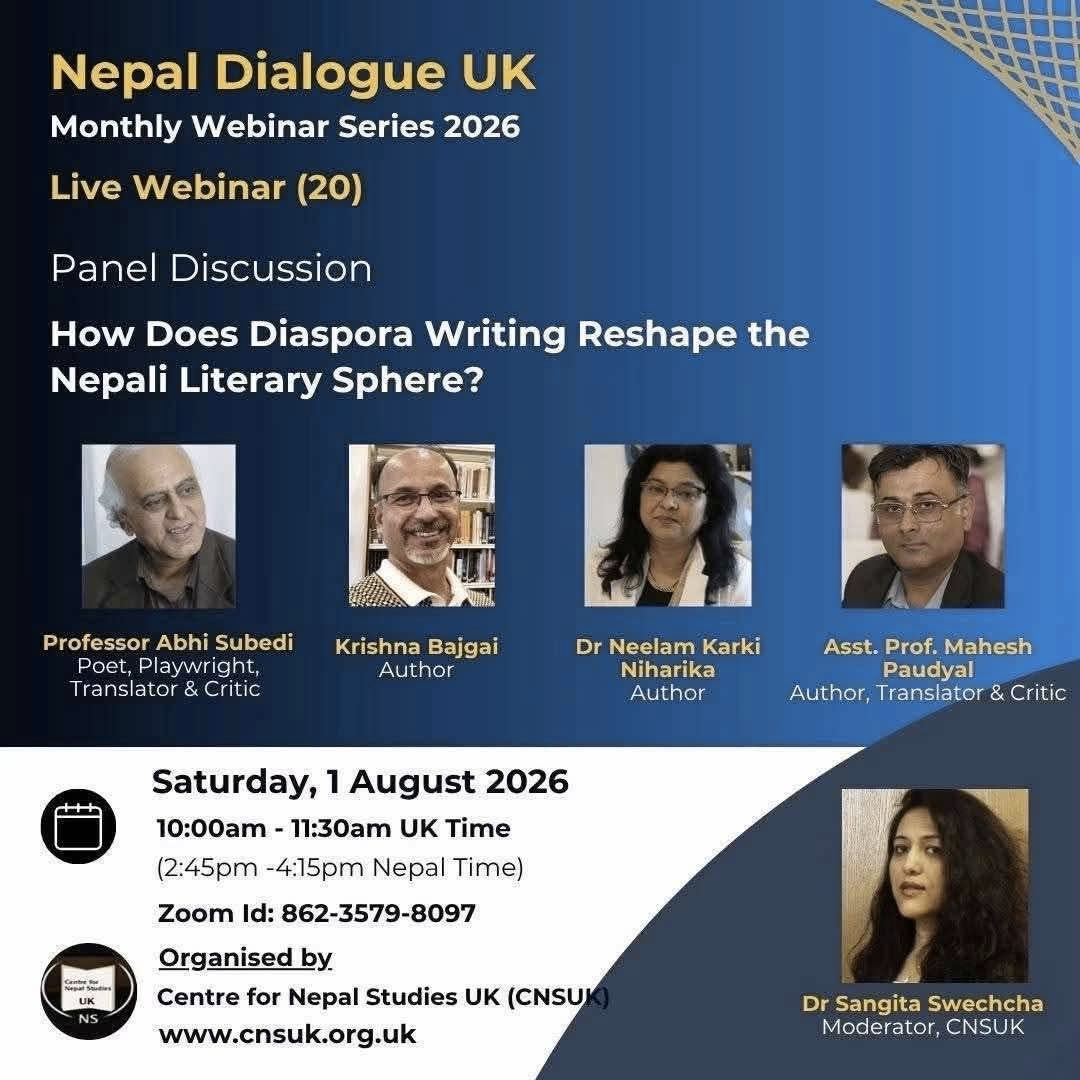
These questions were at the centre of the 20th edition of the Nepal Dialogue webinar, organised by the Centre for Nepal Studies UK (CNSUK), which I moderated. The webinar focused on the theme “How Does Diaspora Writing Re-shape the Nepali Literary Sphere?” At CNSUK, we chose this subject because the growing body of Nepali writing produced around the world deserves a closer look at how migration is changing both the content and boundaries of Nepali literature.
The discussion featured Professor Abhi Subedi, Krishna Bajgai, Dr. Neelam Karki Niharika and Assistant Professor Mahesh Paudyal.
A Literary Border That Is Difficult to Define
Professor Abhi Subedi began by questioning the boundaries of diaspora literature. He argued that the concept has a long and complicated history in Nepali literature and that the line separating diaspora writing from mainstream Nepali literature is often unclear.
He traced early discussions to literary centres such as Darjeeling and Banaras, where substantial Nepali literary production took place outside the political borders of Nepal. The development of print culture in these centres, he suggested, was crucial to the growth and circulation of Nepali literature.
Subedi questioned whether writers associated with earlier Nepali literary movements in India should automatically be classified as diaspora writers. Some of these writers later became central figures in Nepal’s literary and intellectual establishment, making the distinction between “inside” and “outside” particularly difficult.
For Subedi, the uncertainty is itself important: diaspora literature cannot be adequately understood simply through geography.
He also challenged another common assumption that every Nepali writer living in countries such as the United States, Britain, Canada or Australia should automatically be called a diaspora writer. The content, identity and relationship between the writing and the experience of migration, he suggested, matter as much as the writer’s physical location.
Writing From a New Reality
Dr. Neelam Karki Niharika focused on the challenges of writing from abroad. She argued that a writer should not be labelled a diaspora writer simply because they live outside Nepal. The writing itself must engage with the experiences and realities of migration.
For migrant writers, adapting to a new society often comes first. Settlement, work, family responsibilities and the need to understand an unfamiliar cultural environment can make it difficult to immediately write about the new country with depth and authenticity.
As a result, writers who move abroad may initially continue writing about Nepal. Gradually, their experiences in the new country begin to enter their work, creating a space between the remembered homeland and the lived reality of the adopted country.
For Karki, these experiences can enrich Nepali literature by introducing new social realities, cultural encounters and perspectives.
Writer Krishna Bajgai, drawing on his own experience as a diaspora writer, described migration as both a physical and emotional journey. Nepalis have carried their language and culture across the world through education, employment, business and migration, making Nepali an increasingly global language.
Bajgai argued that diaspora writers bring new cultures, histories and experiences into Nepali literature. He particularly highlighted travel writing as a way of connecting geography with human experience.
He also pointed to digital platforms, social media and diaspora organisations as important forces in promoting Nepali language and literature abroad, including through publications, cultural programmes and language classes for children.
What Makes Writing Diasporic?
Assistant Professor Mahesh Paudyal brought a critical and academic perspective to the discussion, distinguishing between diaspora communities and diaspora writing.
Not everyone who belongs to a diaspora necessarily produces diaspora literature, he argued.
Likewise, simply living abroad does not make every piece of writing diasporic. The work itself, its themes, experiences, identities and relationship with migration needs to be considered.
Paudyal also discussed the historical development of Nepali literary production outside Nepal, particularly in India, and the complicated relationship between territory, nationality and literary identity.
He highlighted translation as another important way of taking Nepali literary experiences to international readers. He also drew attention to the potential of second-generation diaspora writers, whose experiences may be very different from those of their migrant parents. Born and raised between cultures, they may bring new understandings of identity, belonging and home to Nepali literature.
An Expanding Literary Sphere
The discussion ultimately suggested that diaspora writing cannot be defined by geography alone. A writer living abroad is not automatically a diaspora writer, just as a writer living in Nepal may engage deeply with diasporic experiences through themes of migration, displacement and belonging.
The speakers also reminded us that Nepali literature has never been entirely confined within Nepal’s borders. Its history includes significant literary production from outside the country, particularly in India. What is different today is the scale of Nepali migration and the ability of writers to connect with readers around the world.
For me, the discussion showed that diaspora writing is not a fixed category. It is an evolving space shaped by migration, memory, language, culture and generations.
It appears from the discussion that, rather than viewing diaspora writing as a peripheral branch of Nepali literature, it is perhaps time to see it as an integral part of the changing Nepali literary landscape, one that is expanding the language, experiences, and boundaries of what Nepali literature can be.
– Dr Sangita Swechcha, CNSUK



सम्बन्धित सामग्रीहरू
BRAHMAN 2026: Artist P. Singh to Explore Form, Nature and Spirit in Upcoming Exhibition in Nepal

हाम्रो सिफारिस



- १
- २
- ३
- ४
- ५