

 20:15
|
20:15
|
 ०१:००
०१:०० Women can benefit from war in certain circumstances, says Prof Yadav


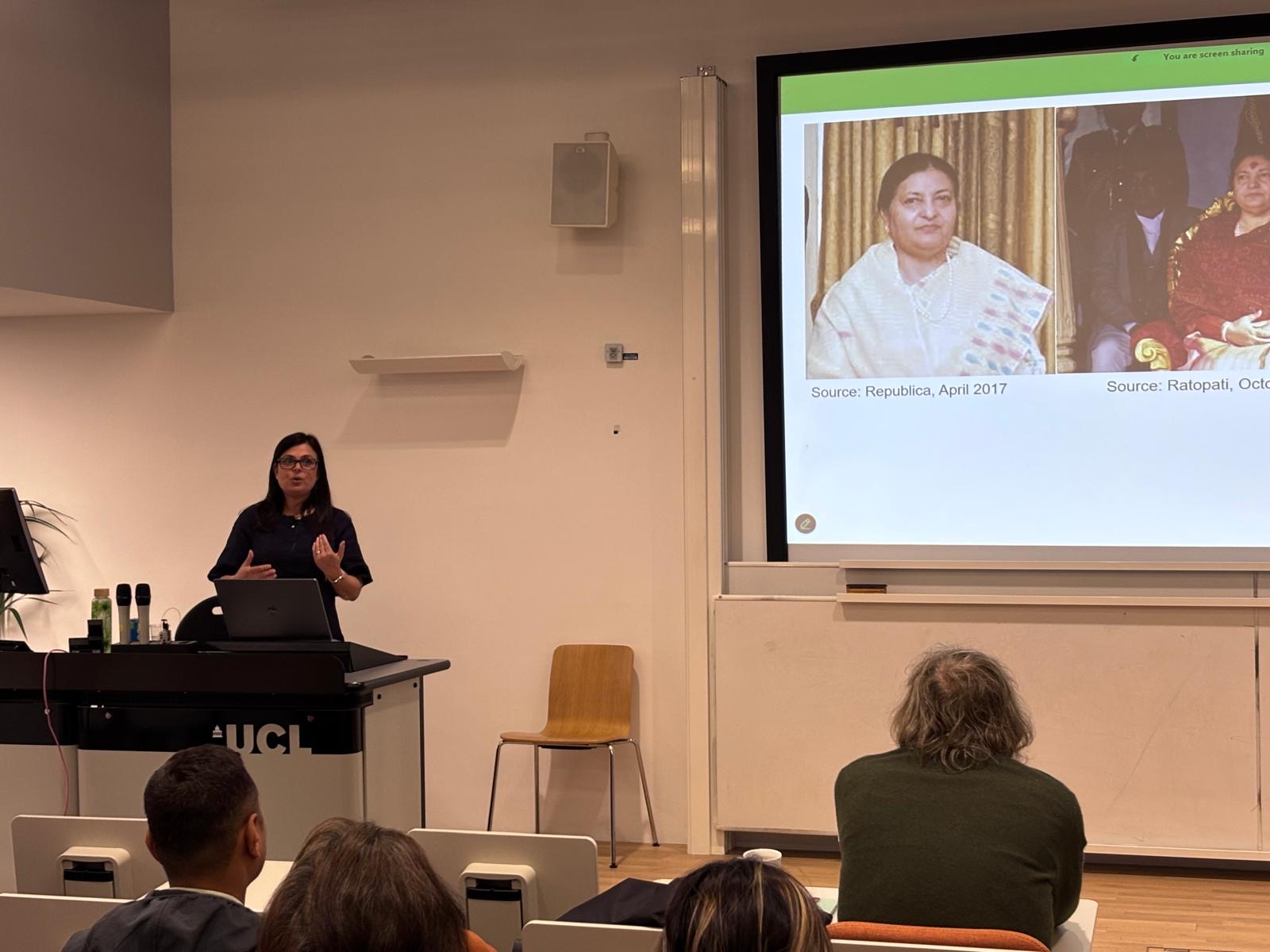
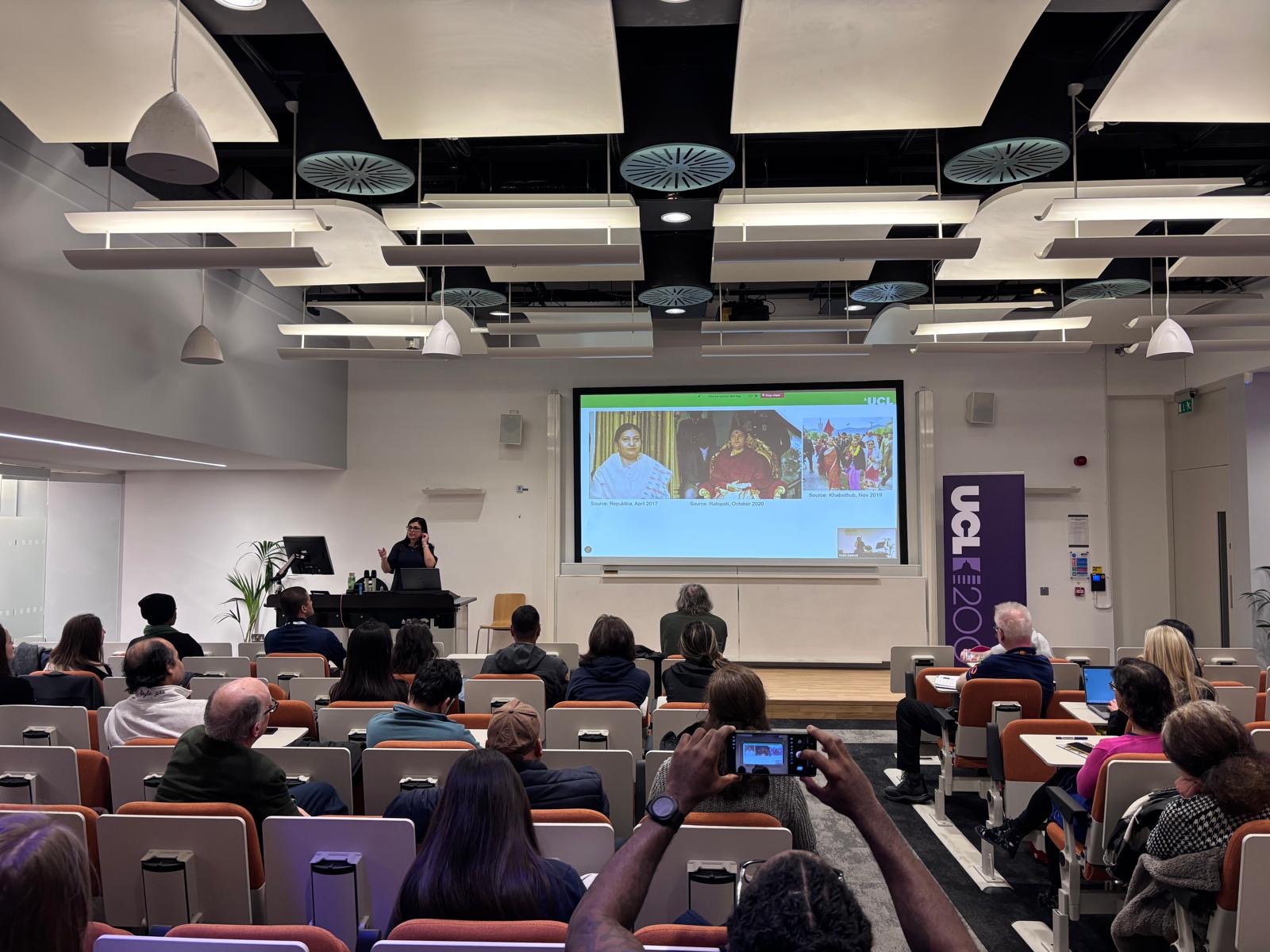
London — A thought-provoking inaugural lecture at University College London (UCL) examined the complex and often controversial question: Can women benefit from war?
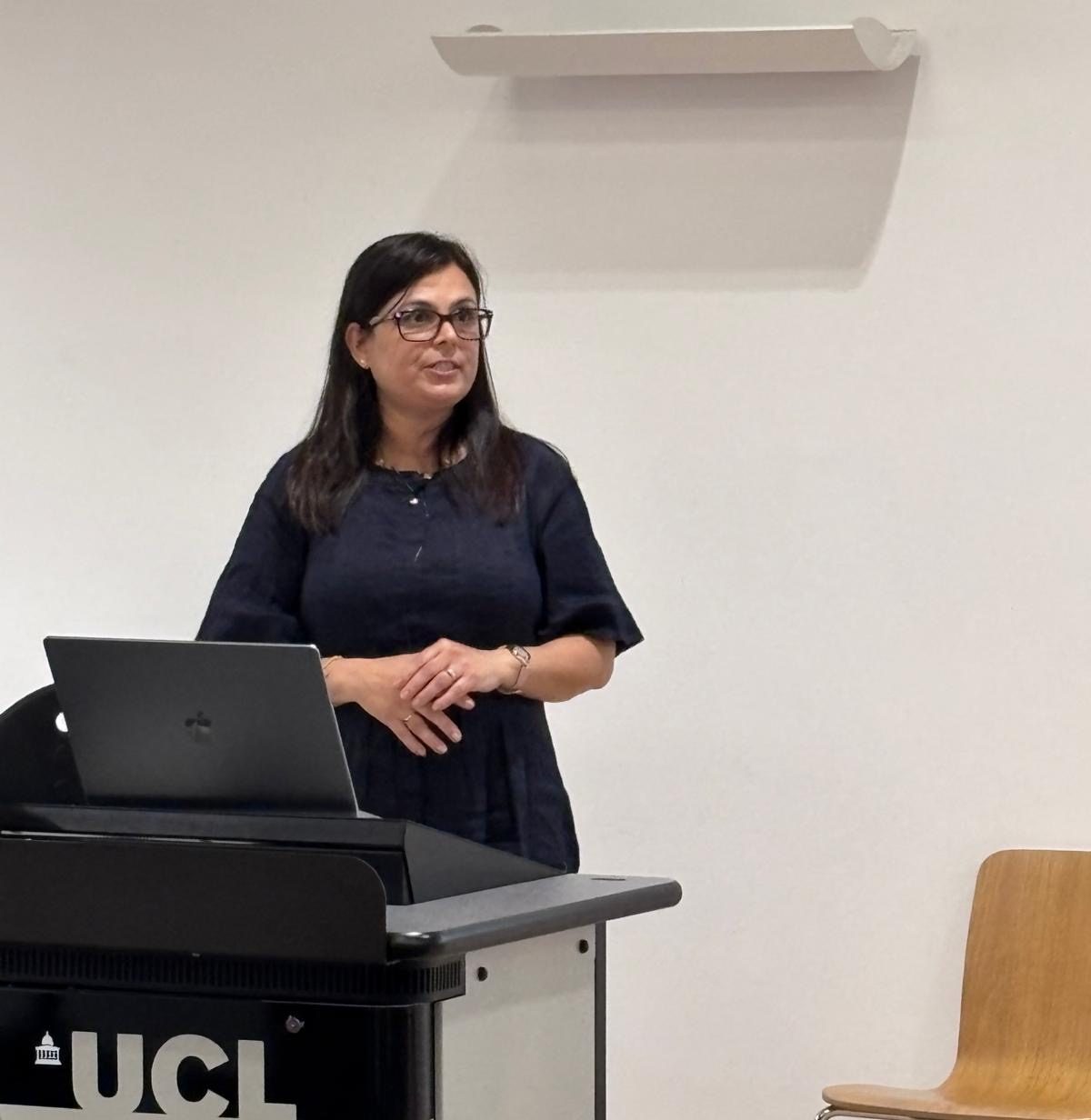
Held at the Denys Holland Lecture Theatre in Bentham House at the UCL on 24 March 2026, the lecture was delivered by Professor Punam Yadav of UCL’s Risk and Disaster Reduction (RDR) department.
War’s Paradoxical Impact on Women
Professor Yadav began by acknowledging that women and children are overwhelmingly among the primary victims of armed conflict worldwide. However, she argued that in certain contexts, war can also open up unexpected spaces for social, economic, and political transformation for women.
Drawing on Nepal’s experience, she highlighted the decade-long Nepal Civil War (1996–2006), launched by the Communist Party of Nepal (Maoist) with the aim of establishing a republic. The conflict resulted in over 13,000 deaths, displaced more than 200,000 people, and left over 2,800 individuals disappeared.
Notably, nearly one-third of Maoist combatants were women, marking a significant shift in traditional gender roles.
Social Transformation and New Identities
The conflict, Professor Yadav explained, created new social categories of women, including war widows, ex-combatants, and displaced women. Many widows were young—under the age of 40—and began to challenge deeply rooted social norms.
In a striking example of resistance, widows started avoiding white sari and started wearing other colours —traditionally forbidden under religious and cultural practices. This symbolic act, supported by civil society and later by government policies, marked a broader shift in attitudes toward widowhood.
She also cited the example of Sumitra Dangal, who in 1996 became Nepal’s first female tempo (three-wheeler) driver. Her entry into a male-dominated profession inspired many other women to follow suit, particularly in Kathmandu.
From Marginalisation to Leadership
Professor Yadav pointed out that such transformations extended into the political sphere. Nepal has seen increasing female participation in governance, including the election of Bidya Devi Bhandari, who was herself a widow.
She noted that in the 2022 local elections, 41 percent of elected representatives in Nepal’s local bodies were women—an indicator of gradual but meaningful progress.
Ongoing Challenges and Resistance
Despite these advances, Professor Yadav cautioned that patriarchal structures remain deeply entrenched. However, she emphasised that there is growing resistance and “pushback” from women, supported initially by non-governmental organisations that helped widows organise and advocate for their rights.
She framed these changes through a sociological lens, arguing that transformation often occurs when crises disrupt the alignment between social structures and lived realities, creating opportunities for change.
During the lecture and subsequent Q&A session, Professor Yadav also shared personal reflections, including experiences from her own family, underscoring how individual lives intersect with broader social transformations.
The lecture concluded with a forward-looking discussion on ongoing and future research projects, exploring how crises—from war to climate change—can reshape gender roles in both empowering and challenging ways.
The event was organised by UCL’s Risk and Disaster Reduction department and drew academics, students, and researchers interested in gender, conflict, and social transformation.



सम्बन्धित सामग्रीहरू

BRAHMAN 2026: Artist P. Singh to Explore Form, Nature and Spirit in Upcoming Exhibition in Nepal

हाम्रो सिफारिस


- १
- २
- ३
- ४
- ५